
Every child deserves to grow up in an environment where they are safe, respected, supported and able to develop their potential.
Yet keeping children safe requires more than telling them to be careful.
Child protection involves the people, systems, services, laws, relationships and community practices that help prevent children from experiencing violence, abuse, neglect, exploitation and other forms of harm.
UNICEF describes child protection as the prevention of and response to violence, exploitation and abuse of children in all settings.
This includes children who may be particularly vulnerable because they are living without adequate family care, on the streets, or in situations such as conflict or natural disasters.
Understanding what child protection really means matters because protecting children is a shared responsibility.
Families, schools, communities, governments, organisations and individuals all have a role to play.
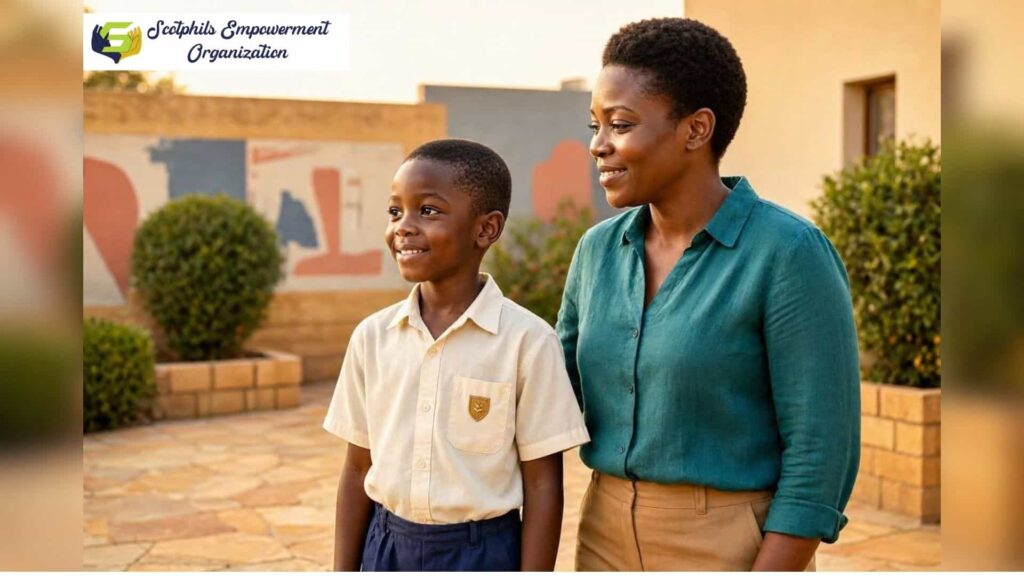
What Does Child Protection Mean?
In simple terms, child protection means taking action to prevent children from being harmed and responding appropriately when harm occurs.
The concept covers more than physical safety.
According to UNICEF, child protection includes preventing and responding to violence, exploitation, abuse, neglect and harmful practices against children.
The World Health Organization similarly identifies child maltreatment as including physical and emotional ill-treatment, sexual abuse, neglect, negligence and commercial or other exploitation that causes, or has the potential to cause, harm to a child’s health, survival, development or dignity.
This means child protection can involve many different areas of a child’s life.
It can include protecting children from:
- Physical violence and abuse
- Emotional or psychological abuse
- Sexual abuse and exploitation
- Neglect and inadequate care
- Exploitative labour
- Trafficking
- Harmful practices
- Violent forms of discipline
- Unsafe environments
- Other situations that threaten their rights, safety, development or dignity
Child protection is therefore both preventive and responsive.
It seeks to reduce risks before harm occurs while ensuring that appropriate support is available when a child has already been affected.
Child Protection Is About More Than Responding to Abuse
One common misunderstanding is that child protection begins only after something has gone wrong.
In reality, prevention is an important part of protection.
The World Health Organization identifies approaches such as supporting parents and caregivers, promoting positive parenting, strengthening children’s education and life skills, creating safer environments, changing harmful social norms, enforcing protective laws, and providing appropriate response services as parts of preventing child maltreatment.
This changes the question from:
“What do we do after a child is harmed?”
to a broader question:
“What can we do to make harm less likely in the first place?”
That may mean helping caregivers develop safer and more supportive parenting practices.
It may mean ensuring that children know how to seek help when they feel unsafe.
It may mean making schools and community spaces safer.
It may also mean strengthening systems that identify concerns and connect children and families with appropriate services.
Effective protection requires attention to all of these areas.
What Does Child Protection Look Like in Practice?
Child protection does not always look dramatic.
Sometimes it means a child has a safe adult they can speak to.
Sometimes it means a school has clear procedures for responding to concerns about a child’s safety.
It can mean helping families access healthcare, education or social support when these services are needed.
It can mean ensuring that children without appropriate family care receive suitable protection and support.
It can also mean communities recognising harmful practices and working together to create safer environments for children.
These actions may appear different, but they share an important principle: children should not have to face serious risks alone.
Protection works best when systems and people around children are prepared to recognise risks, prevent harm where possible and respond appropriately when concerns arise.
Why Does Child Protection Matter?
1. Children have a right to safety and dignity
Children are people with rights, not simply recipients of adult care.
Protecting children therefore involves respecting their dignity and their right to grow and develop without violence, abuse and exploitation.
UNICEF’s global child protection strategy places prevention and response to exploitation, abuse, neglect, harmful practices and violence within the broader framework of children’s rights.
This is important because a child’s vulnerability should never become a reason to disregard their voice, dignity or humanity.
2. Harm during childhood can have lasting consequences
Violence, abuse and neglect can affect children’s physical health, emotional wellbeing, development and ability to learn.
The WHO reports that child maltreatment can have immediate and long-term consequences for physical and mental health, education and social wellbeing.
Protecting children therefore has implications beyond immediate safety.
A child who is safe, supported and able to access appropriate care and education has better conditions in which to learn, develop relationships and participate in their community.
3. Protection supports education and opportunity
Education and child protection are closely connected.
Children who experience violence, exploitation or serious neglect may face barriers to consistent learning and healthy development.
UNICEF identifies inadequate education among the risks associated with violence, exploitation and abuse.
This is why protecting a child cannot always be separated from ensuring that the child can learn and participate in society.
A protective environment should give children room to develop their abilities, pursue education and imagine a future beyond immediate circumstances.
4. Prevention can reduce harm
Child maltreatment is not inevitable.
The WHO identifies evidence-based prevention approaches that include supporting parents and caregivers, promoting positive parenting, strengthening education and life-skills programmes, creating safe environments and improving response services.
Prevention therefore deserves serious attention alongside response.
The earlier risks can be recognised and addressed, the greater the opportunity to protect children from avoidable harm.
Child Protection Is a Shared Responsibility
No single organisation can protect every child by itself.
Children live within families, schools, communities and wider social systems. Each of these environments can influence their safety and wellbeing.
Families and caregivers
Parents, guardians and other caregivers have an important role in creating nurturing and safe environments.
Evidence-based parenting support can help caregivers develop relationships and practices that reduce the risk of maltreatment.
WHO guidelines specifically recommend evidence-based parenting interventions aimed at reducing child maltreatment and harsh parenting while strengthening parent-child relationships.
Schools
Schools can contribute to child protection by creating environments where children are treated with respect and where concerns about their safety can be identified and appropriately addressed.
Education can also help children develop knowledge and skills that strengthen their ability to recognise risks and seek help.
Communities
Communities can help identify risks, support families and challenge harmful norms or practices.
Community participation is particularly important because child protection does not happen in isolation.
Children are part of families and communities, and sustainable protection requires people around them to participate in creating safer environments.
Government and institutions
Governments and institutions have responsibilities that include establishing and implementing appropriate laws, policies, services and systems.
In Nigeria, the Child Rights Act was enacted nationally in 2003.
UNICEF Nigeria notes that child protection involves strengthening legislative and institutional frameworks, improving social welfare and justice services, supporting social norms change, strengthening birth registration and ensuring children in humanitarian situations can access preventive and responsive services.
The existence of laws and policies, however, is only one part of effective protection.
Implementation, resources, accountability and functioning services also matter.
Civil society organisations
Non-governmental organisations can complement wider child-protection systems through education, community outreach, support programmes, advocacy, partnerships and other appropriate interventions.
Their work should be grounded in evidence, accountability and respect for the dignity of the people they serve.
Child Protection in Nigeria
Child protection is particularly relevant to Nigeria’s development context.
UNICEF Nigeria identifies violence against children as occurring in homes, families, schools, communities and other environments where children should be safe.
Its child-protection programme focuses on areas including legal and institutional systems, social norms, birth registration, case management and services for children in humanitarian situations.
Nigeria’s 2024 Situation Analysis of Children and Adolescents, produced by the Federal Ministry of Budget and Economic Planning with technical support from UNICEF, identifies persistent challenges affecting children, including poverty, access to quality education, nutrition and widespread violence.
These challenges demonstrate why child protection should be understood as part of wider community development.
Keeping children safe requires attention to the conditions in which children live, learn and grow.
It also requires collaboration among government institutions, communities, families, civil society organisations and other stakeholders.
What Can Ordinary People Do?
You do not need to run an organisation to contribute to child protection.
Depending on your role and circumstances, responsible action can include:
- Treating children with dignity and respect.
- Learning about common forms of child abuse, neglect and exploitation.
- Creating environments where children can speak about concerns without being dismissed or shamed.
- Supporting safe and positive approaches to parenting and discipline.
- Taking concerns about a child’s safety seriously.
- Following appropriate safeguarding and reporting procedures when a child may be at risk.
- Supporting credible organisations working to strengthen child welfare.
- Avoiding the sharing of children’s personal information or images without appropriate consent and safeguards.
- Supporting access to education, healthcare and other services that contribute to children’s wellbeing.
- Challenging attitudes or practices that normalise violence or exploitation.
The appropriate response to a child-protection concern depends on the circumstances and the laws and services available in the relevant location.
Serious concerns should be referred through appropriate safeguarding, child-protection, health, social welfare or law-enforcement channels rather than handled informally or publicly.
Where Scotphils Fits In
Child welfare and protection are among the areas of work identified by Scotphils Empowerment Organization.
Scotphils Empowerment Organization is a Nigerian non-governmental organisation focused on improving the lives of vulnerable children and underserved communities through education, care, community outreach and empowerment.
Its stated approach is people-centred and values-driven, with emphasis on dignity, opportunity, inclusion, accountability and sustainable change.
Its areas of work include child welfare and care, education and learning, health and wellbeing, community outreach and development, economic empowerment, and social justice and inclusion.
This connection matters because child protection sits within a wider understanding of community wellbeing.
Children need protection from harm, but they also need opportunities to learn, access appropriate support, develop their abilities and participate in their communities.
For organisations working with vulnerable children, that means protection should remain grounded in dignity, responsible practice and respect for children’s humanity and agency.
Scotphils’ wider organisational vision is of a world where people, regardless of background, have equal access to resources, opportunities, quality education and a life of dignity.
Creating Safer Environments for Children
Child protection is not a single programme or one-time intervention.
It is an ongoing commitment to preventing harm, recognising risks, responding appropriately to concerns and creating environments where children can grow and participate with dignity.
It involves families. It involves schools. It involves communities. It involves the government and institutions. It involves organisations and individuals.
Most importantly, it requires us to see children as people whose safety, rights, development and dignity matter.
Understanding child protection is an important first step. The next step is learning how effective protection works and how individuals and organisations can contribute responsibly.
Learn more about child welfare, protection and community development through Scotphils Empowerment Organization’s work and resources.
Please leave a comment: How can your family, school, organisation or community contribute to creating a safer environment for children?
Sources & References
1. UNICEF — Child Protection Overview
UNICEF’s definition and overview of child protection, including prevention and response to violence, exploitation and abuse.
2. UNICEF — Child Protection Strategy 2021–2030
UNICEF’s strategic framework for preventing and responding to exploitation, abuse, neglect, harmful practices and violence against children.
3. World Health Organization — Child Maltreatment
WHO’s current fact sheet covering the definition, consequences, risk factors and prevention of child maltreatment.
4. World Health Organization — Violence Against Children
WHO’s overview of violence against children and evidence-based prevention approaches.
5. WHO — Guidelines on Parenting Interventions to Prevent Maltreatment
Evidence-based guidance on interventions for parents and caregivers of children aged 0–17.
6. UNICEF Nigeria — Child Protection
Information on child protection priorities and systems in Nigeria.
7. UNICEF Nigeria — The State of Nigeria’s Children 2024
Federal Government of Nigeria and UNICEF analysis of the situation of children and adolescents in Nigeria.